
Inspired by the celestial
Sky-themed art in London

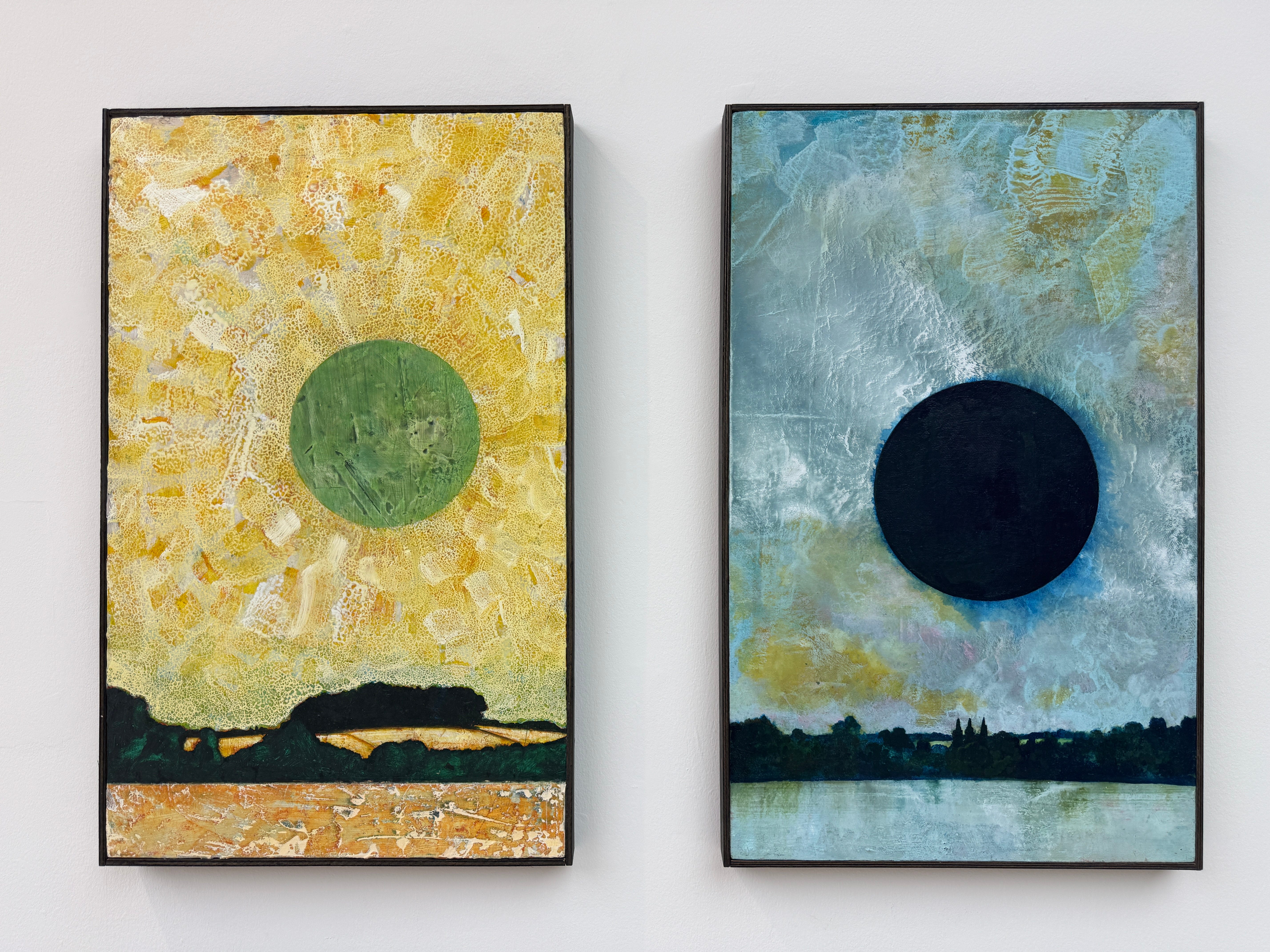
In June, I had a chance to visit The Sun and The Moon: Art Inspired by the Celestial, an exhibition currently on at London’s Saatchi Gallery. I went with new friends I made during the IAU’s biennial Communicating Astronomy with the Public (CAP) conference – Dorian, who works for the Royal Observatory in Greenwich, and Anne, who works at the Square Kilometre Array radio observatory at Jodrell Bank in Cheshire (aside: Jodrell Bank is currently under threat after the UK government pulled £2.8 million of its funding recently; read more here).
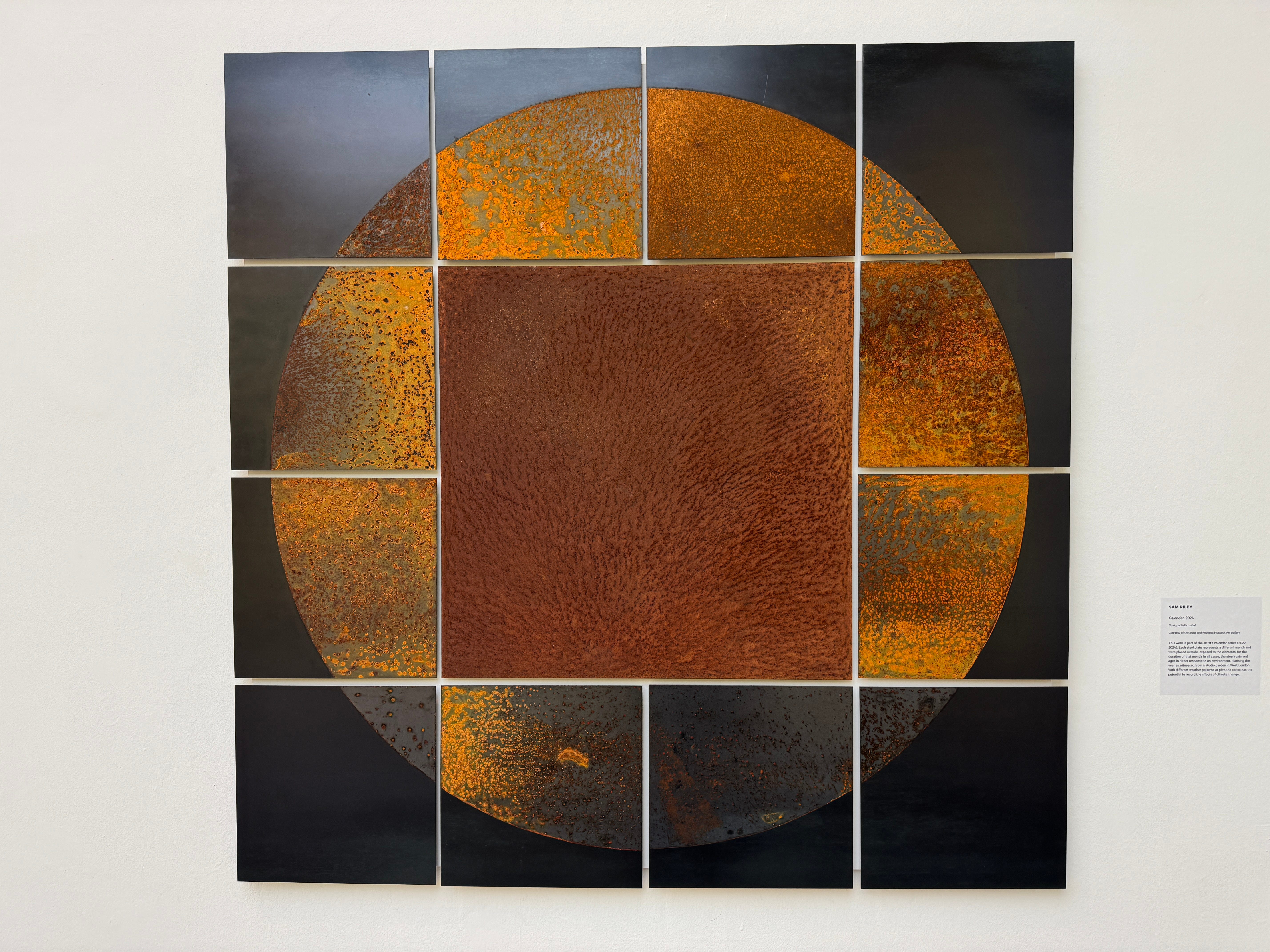
Occupying two floors and nine major gallery spaces, the exhibition presents artworks, installations and archival material exploring how the Sun and the Moon have shaped art, science, belief and imagination across cultures and over centuries. It incorporates an astonishing number of works. It was a hot day and I assumed, wrongly, that 90 minutes would be sufficient to see it all, but in the end, we were rushed to our meal, and I wished I’d had at least 3 hours.
In a press release, Saatchi Gallery’s director Paul Foster said that the exhibition reflects on objects in the sky that we too often take for granted but which represent amazing and beautiful essentials to all life on Earth.
“Artists working today are as influenced and inspired by these bodies as those who have created works throughout human history,” he said. “The exhibition is designed to be an uplifting celebration of the world and solar system in which we live.”
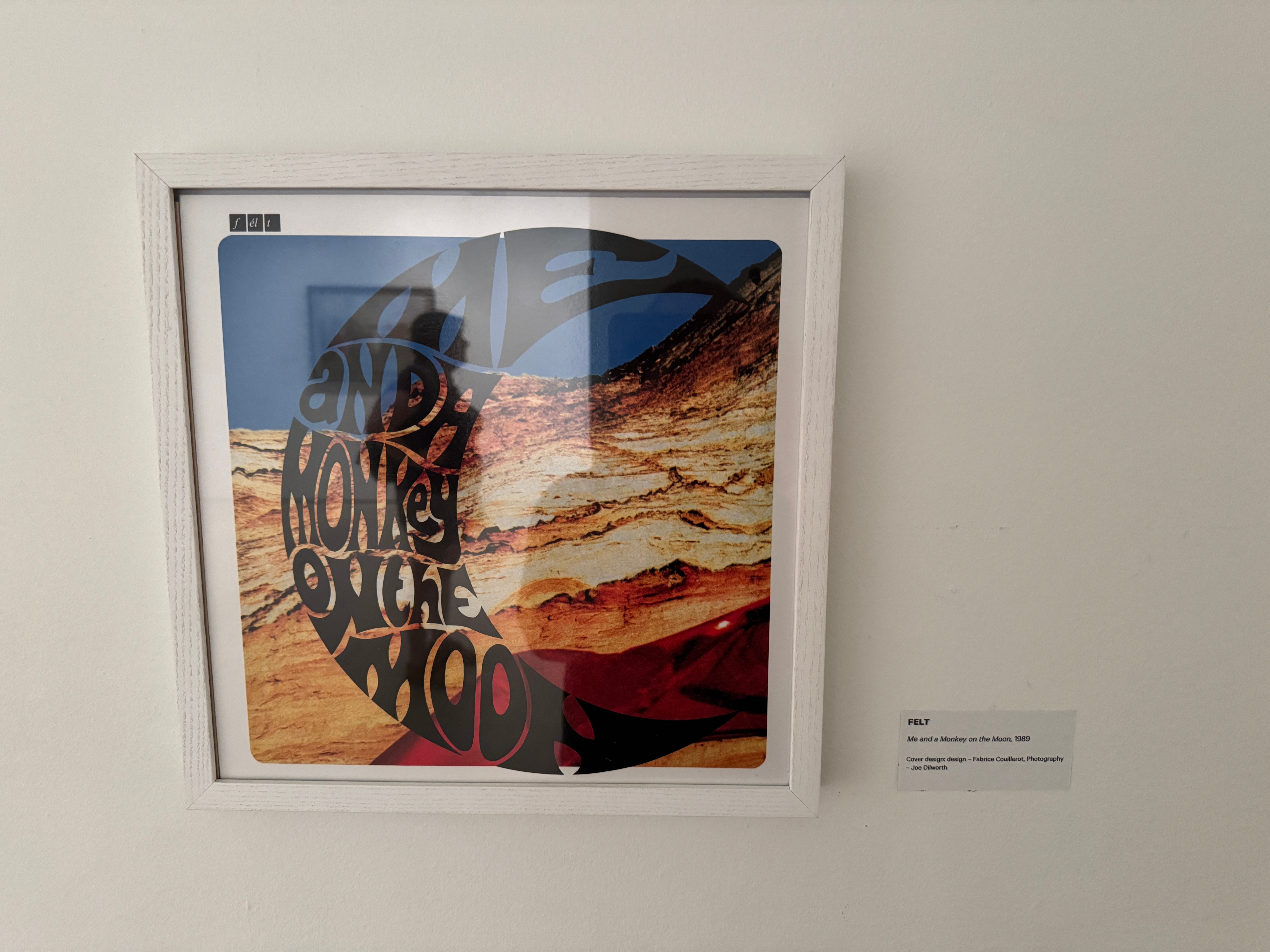
The exhibition is so smartly curated. It is situated as a journey through a complete 24-hour cycle, moving from the first gallery – Dawn, which includes works exploring how early cultures rationalised the Sun and Moon as deities and cosmic forces, and includes works like the ancient Sol Invictus Celtic Bust and a faithful replica of the Nebra Sky Disc – to The Sun Rising, Zenith, Setting Sun, Evening, Walking on the Moon, Midnight and, finally, Darkest Hours. Each gallery reflects on a period of the day and explores different stories associated with the Sun and the Moon, through works that range from painting to moving images, textiles, photography, music and popular culture, exploring mythology, ritual, timekeeping, lunar exploration and spirituality.
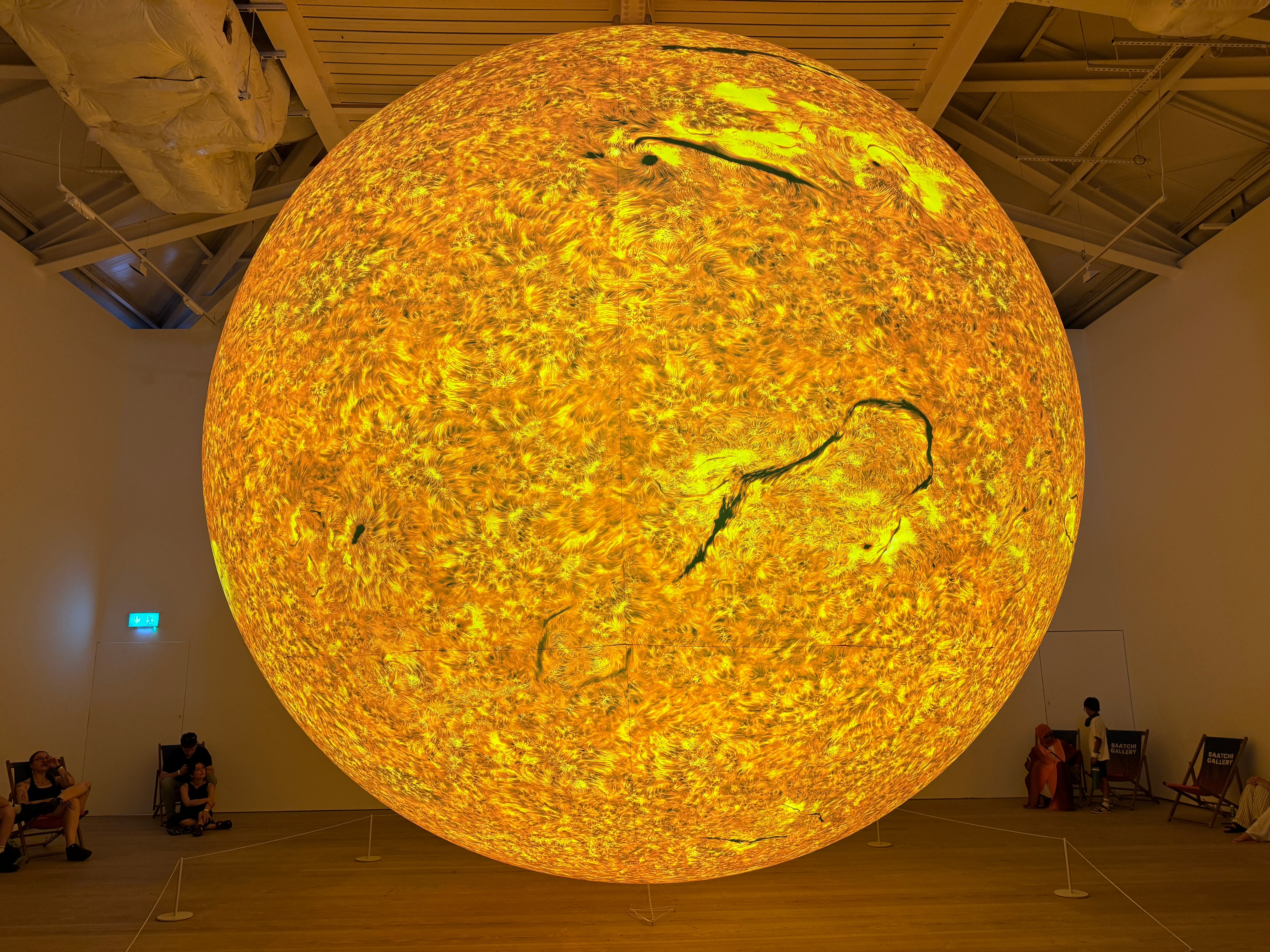
Looming midway through is one of Luke Jerram’s now-famous giant celestial sculptures: Helios, a monumental six-metre sculpture of the Sun, which is animated with imagery of the Sun’s surface compiled from photographs by astrophotographer Dr Stuart Green and NASA observations, with guidance from solar scientist Professor Lucie Green from University College London. Sun loungers in the gallery invited you to sit and admire our star, and it was so hot that day that there was a real sense of being quite close to the surface of the Sun.
The final room was Massless Suns and Dark Suns and Massless Sun and Surface of the Sky – an illusion room filled with hanging balls of light and mirrors created by the teamLab collective. Designed to invite reflection on the nature of existence, this work was initially disorienting, as I felt suspended in space and wasn’t sure where the room's boundaries lay – the experience recalled one of Yayoi Kusama’s infinity mirror rooms, which I saw at Tate Modern in 2024.
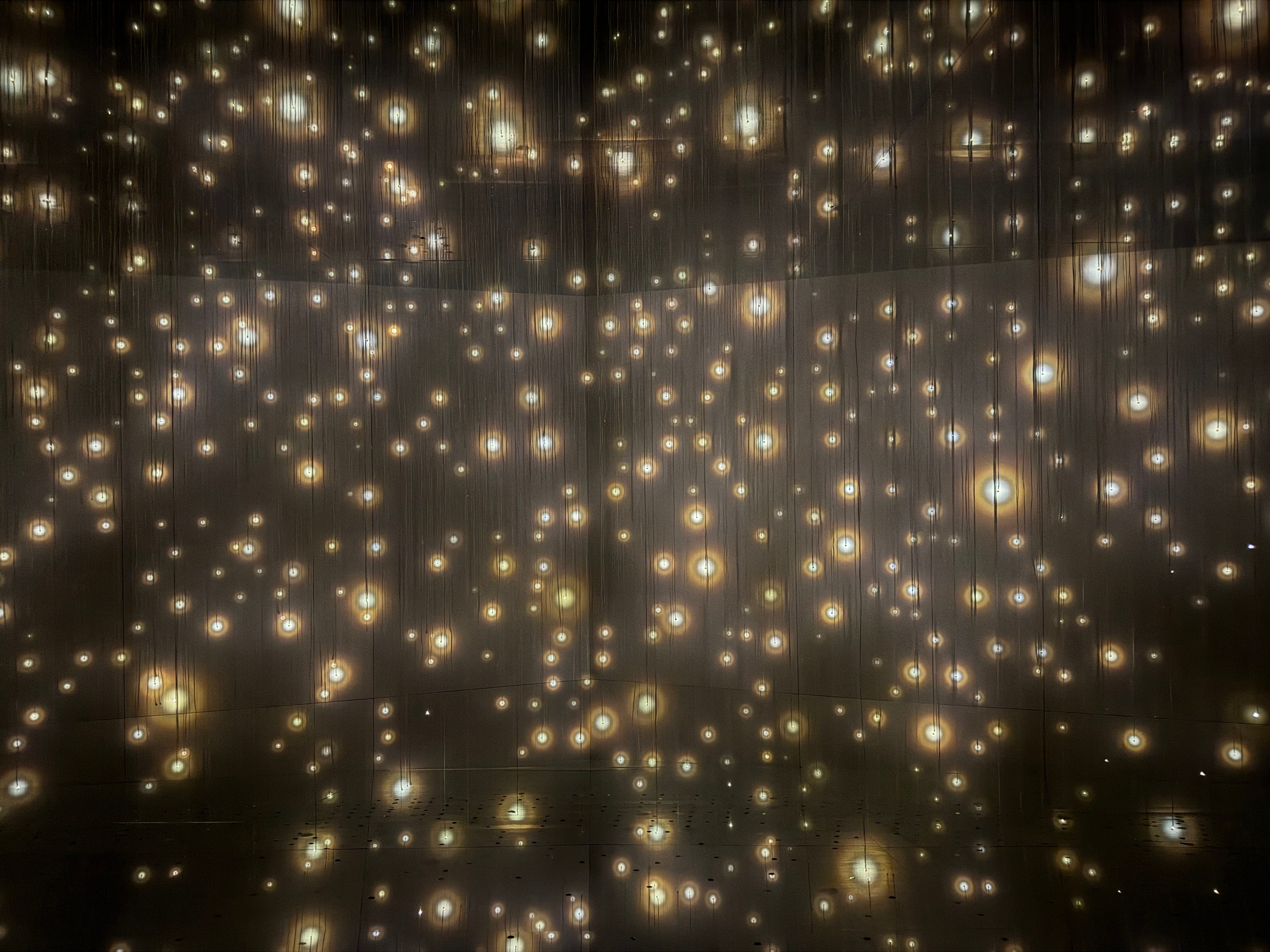
Altogether, an absolutely stunning and comprehensive look at how visions of the sky have shaped art and culture across locations and time periods, with works on loan from an impressive number of institutions. Well worth a visit (on a cool day) and give yourself at least 3 hours inside.
Practical information
The Sun and The Moon: Art Inspired by the Celestial
Saatchi Gallery
Duke of York’s HQ, King’s Road, London, SW3 4RY
saatchigallery.com
Tickets: £13
Until 8 September 2026
Thanks for this review. I wish I could go see this important exhibition. I really appreciated the images. Writing about mountaineers I have been intrigued by how some are obsessed with the stars and the moon. There are artists like that as well. I wonder if there is something in our experience that makes us night-minded or diurnal?